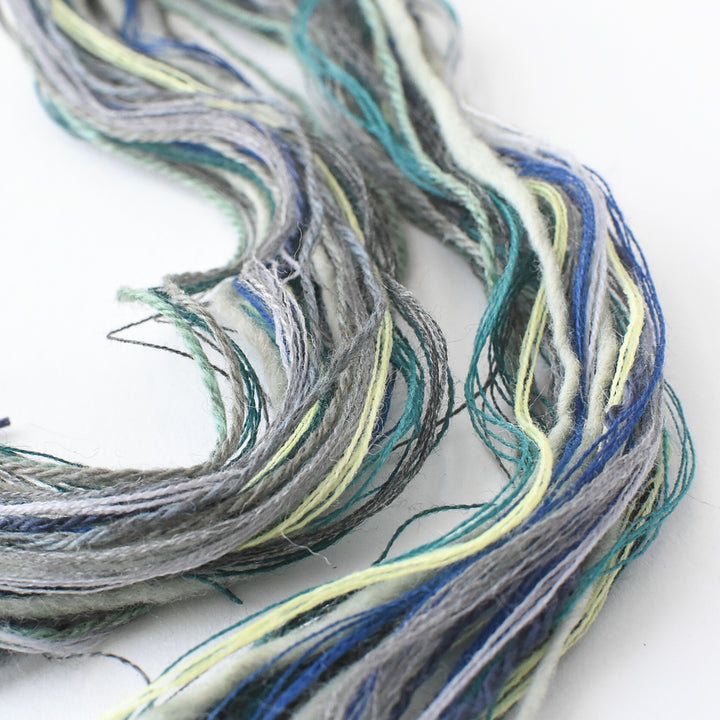
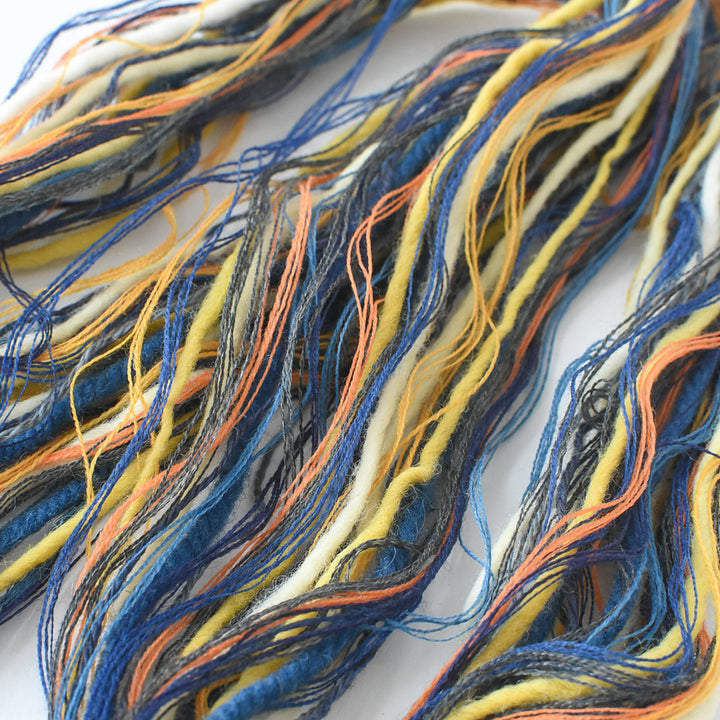
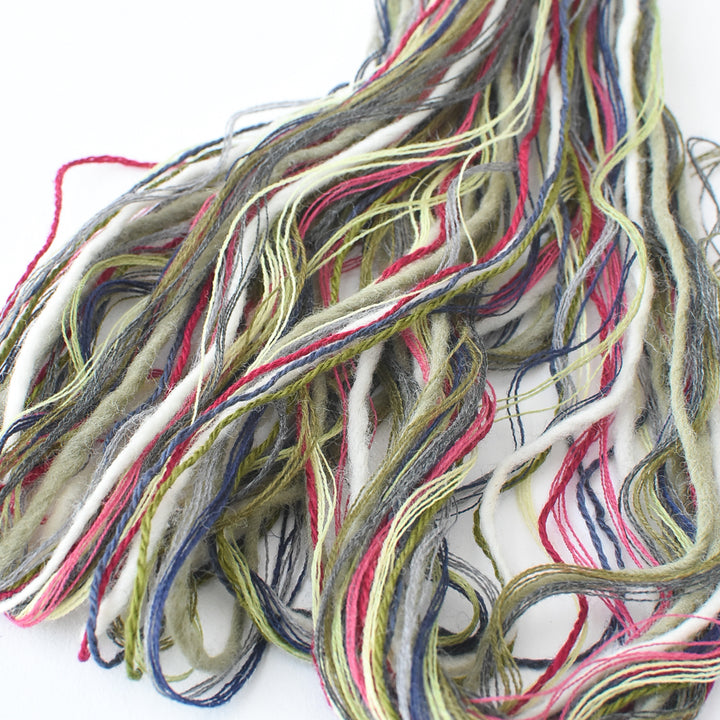
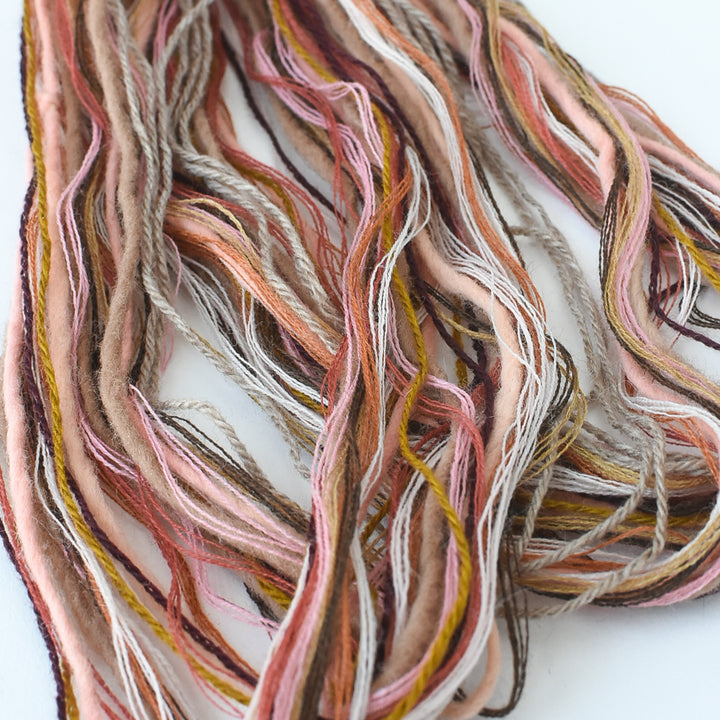
If you’ve ever looked at kasuri fabric, you’ve likely noticed something immediately: the edges of the pattern feel soft. Not blurry in a careless way — but gently feathered, almost atmospheric.
That softness is intentional. It’s the signature of a centuries-old resist-dye weaving technique that requires extraordinary planning before the cloth ever touches a loom.
Kasuri (絣) is Japan’s version of ikat.

What Does “Kasuri” Mean?
The word kasuri comes from the Japanese verb kasureru, meaning “to blur” or “to fade.” That softened edge you see in the motifs? That’s the point.
Unlike printed fabric — where a design is applied to finished cloth — kasuri patterns are created in the threads before weaving begins.
The design is engineered at the yarn level.

How Kasuri Is Made
The process is meticulous and surprisingly mathematical.
1. Pattern Planning
The design is mapped out thread by thread. Artisans calculate exactly where color shifts need to occur in the warp (vertical threads), the weft (horizontal threads), or both.
2. Binding the Threads
Sections of yarn are tightly bound with thread or wrapped to resist dye. These bindings prevent color from penetrating specific areas.

3. Dyeing
The yarns are dyed — traditionally in indigo (ai). Once dry, the bindings are removed, revealing patterned sections within each thread.

4. Alignment on the Loom
This is where the magic happens.
The pre-dyed warp threads are placed on the loom so the color transitions line up precisely. As weaving begins, the weft threads interlock with the warp to form motifs.
Because this alignment is done by hand, slight shifts occur. The result is that distinctive kasuri “blur.”
It’s not a mistake.
It’s evidence of the human hand.
Warp, Weft, or Both?
There are several types of kasuri:
-
Tate-gasuri (warp kasuri) – pattern appears primarily from the warp threads
-
Yoko-gasuri (weft kasuri) – pattern formed through the weft
-
E-gasuri (picture kasuri) – more detailed, pictorial motifs using both
Different regions developed their own specialties.

Why Kasuri Feels Different
Kasuri isn’t just about the pattern. It’s about process.
Because the yarn is dyed before weaving:
- The fabric often has depth and dimensionality that printed cloth can’t replicate
- Indigo grounds feel especially saturated and layered
- Motifs appear slightly alive rather than mechanically sharp
It also tends to age beautifully. Indigo softens, fades, and develops character over time. Many vintage kasuri fabrics were originally woven for kimono, everyday workwear, or family garments meant to last.
They were never disposable textiles.
Vintage Deadstock Kasuri
Some of the kasuri fabrics we carry are vintage deadstock — bolts that were woven decades ago but never cut or used. You may see original paper tags, quality stamps, or mill labels still attached. These markings are part of the fabric’s story.


Some of the other kasuri fabrics we have are upcycled. The bolt of kasuri fabric was originally made into a kimono, and because of the thoughtful, whole-cloth construction process of making the kimono, the fabric is folded and not cut so it can be deconstructed for additional uses. Lucky us!
Most all of the kasure we have was woven in traditional kimono width (around 13–14 inches wide). The fabric lends itself beautifully to:
- Patchwork and pieced garments
- Sashiko and visible mending
- Jackets, bags, pants, and more.
Working with kasuri invites you to think differently about construction. And deconstruction.

What Makes Kasuri Special
In a world of digitally printed textiles, kasuri stands apart because:
- The pattern exists in the thread itself
- The “imperfection” is intentional
- The dyeing happens before weaving
- The cloth reveals its process if you look closely
It rewards attention.
And when you cut into it, you’re participating in a lineage of design that spans centuries.

Explore Our Kasuri Collection
We regularly source vintage and regionally made Japanese kasuri, including Bingo and Kurume pieces.
You can browse our current kasuri fabrics here.
Each listing includes details about width, fiber content, provenance, and notes on condition when applicable.