Let’s show some love to the woolies 🧦
They keep us warm all winter, but over time, even the best-loved socks and sweaters will show signs of wear.
Ready to start repairing them? Darning is one of the simplest ways to extend the life of your clothing—and a small, satisfying step toward a more sustainable wardrobe.
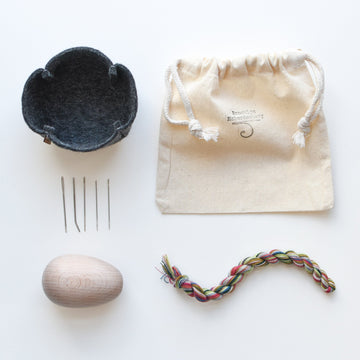
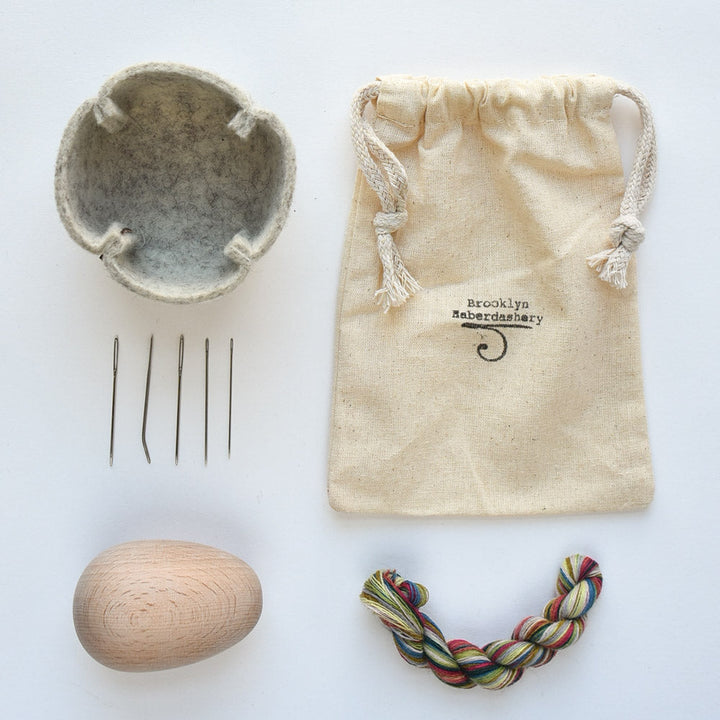
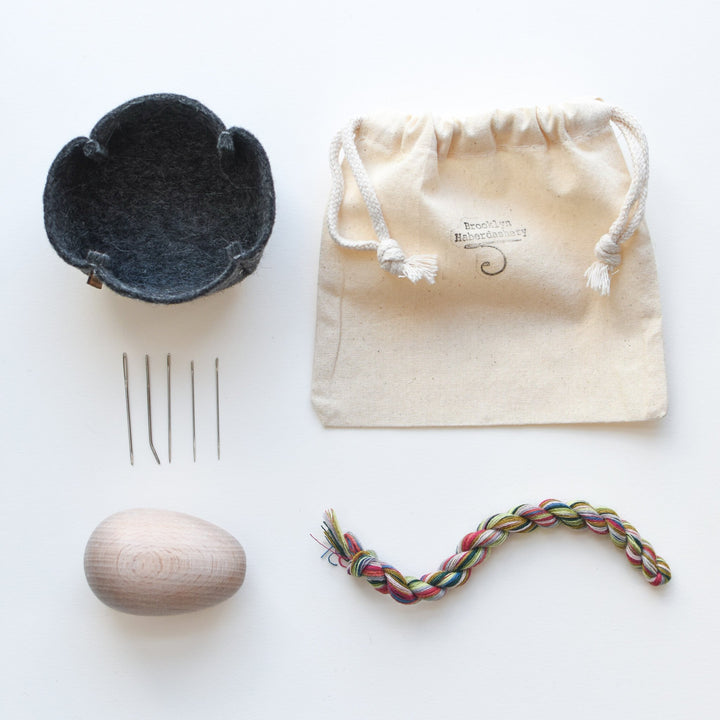
In its most basic form, darning requires just two things: a needle and thread. But a few extra tools can make the process easier, more comfortable, and even a little more enjoyable.
Darning Tools: Needles, Mushrooms, Eggs, etc.
To keep your work stable, it helps to have something firm beneath the area you’re repairing. A wooden darning mushroom is a classic choice, but anything smooth and rounded will work:
a darning egg, a flat stone, a gourd, or even an old light bulb. The goal is simply to hold the fabric taut while you stitch.
Secure the fabric in place with a rubber band or tie—it doesn’t need to be fancy. Use what you already have on hand.


Darning Threads: Best Basics
A helpful rule of thumb: match the fiber of your thread to the fiber of your garment.
Wool for wool, cotton for cotton. Once you’re comfortable, you can bend this rule—but it’s a reliable place to start.
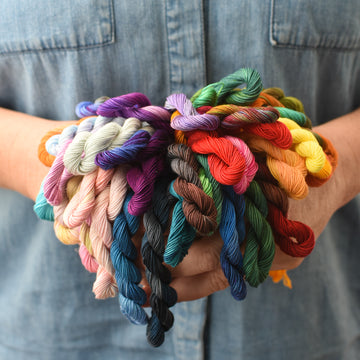
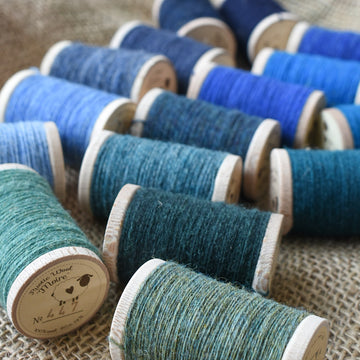
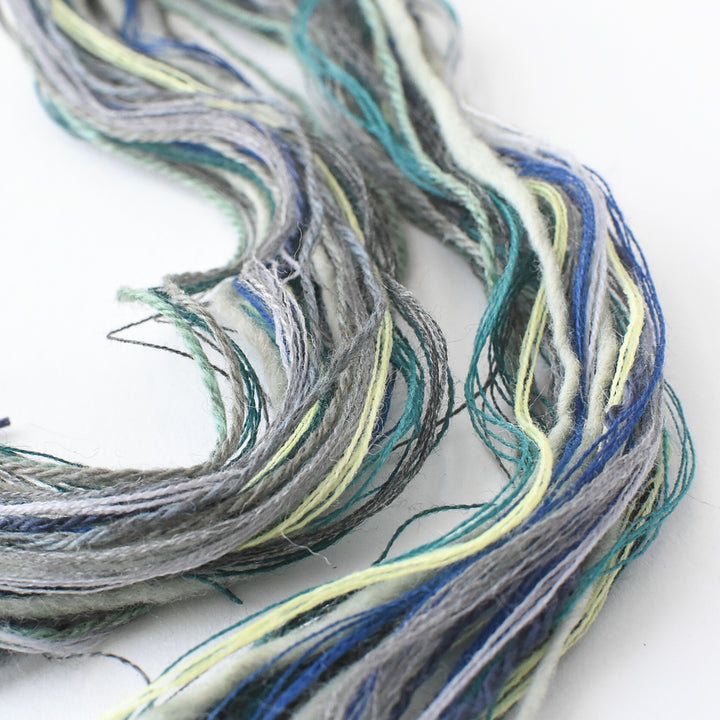
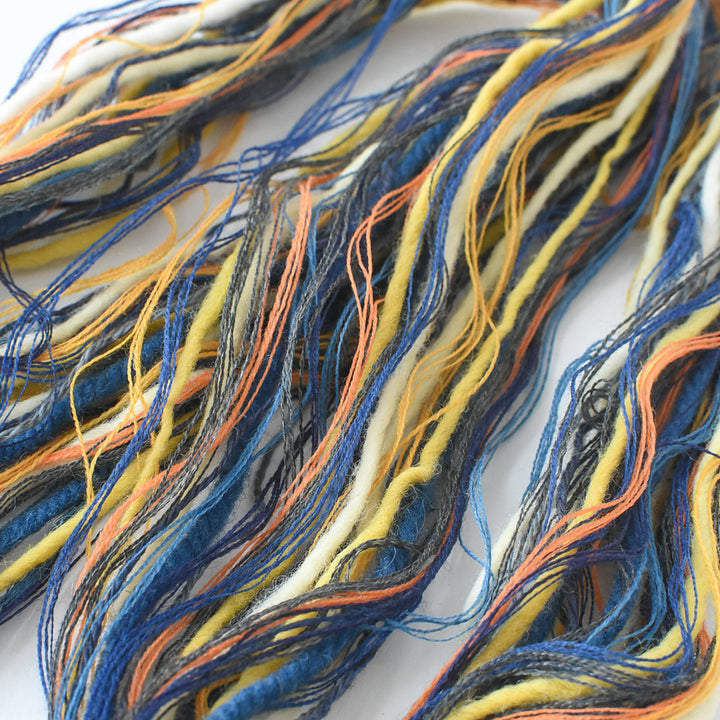
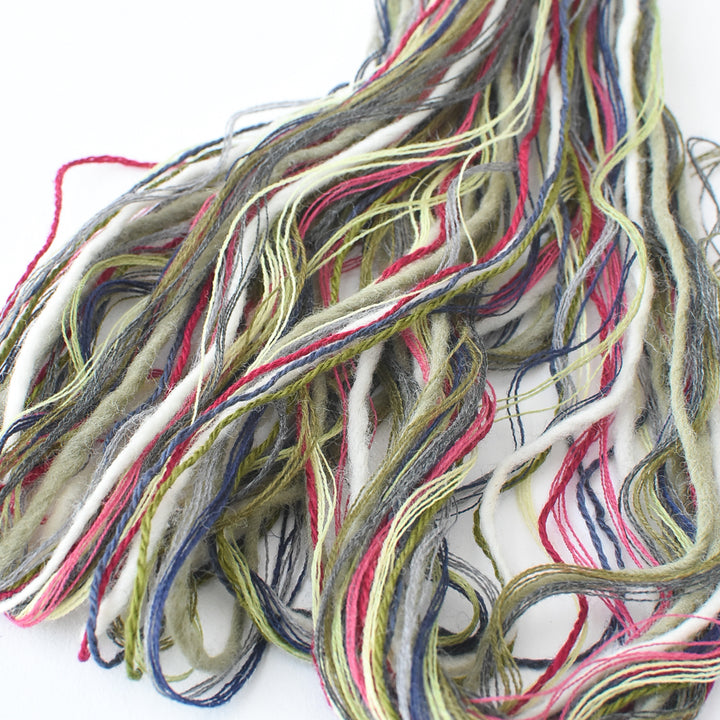
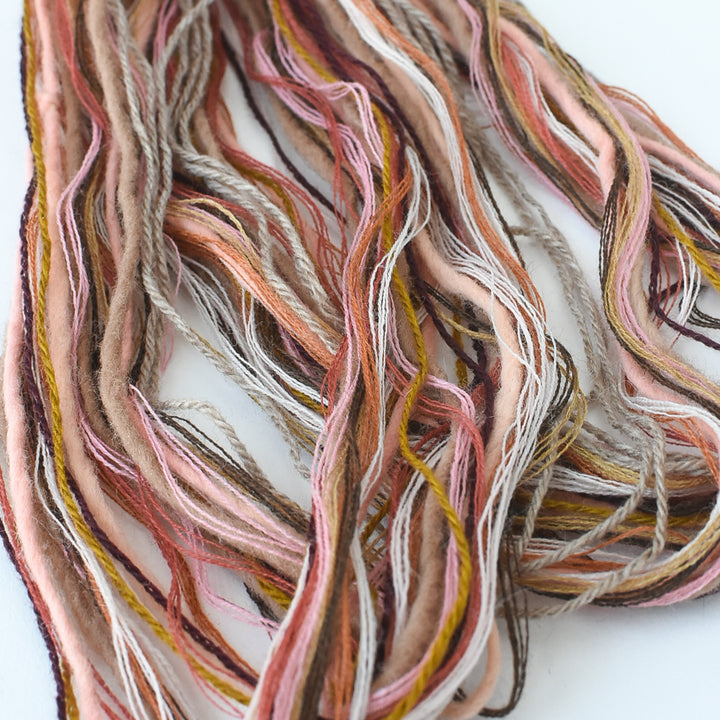
✔️ Wool/poly thread from the storied Laine Saint Pierre in France 🇫🇷 is our go-to for wool or wool-blend socks. It’s durable, flexible, and designed to withstand friction. With its 4 separable strands, so you can choose the thickness of your thread so you can avoid that wretched bunched up feeling inside your shoe.

✔️ Sashiko thread is stronger -- and thus better suited to mending -- than stranded embroidery floss. It is twisted, which makes it more durable. Daruma Sashiko Thread from Japan 🇯🇵 is the colorfast cotton thread that we use on cotton.

A Note on Style
Darning can be nearly invisible or proudly on display. Whether you love tidy, hidden repairs or bold, visible stitches, there’s no “right” way—only what feels good to you and suits the garment.
Darning & Mending Books
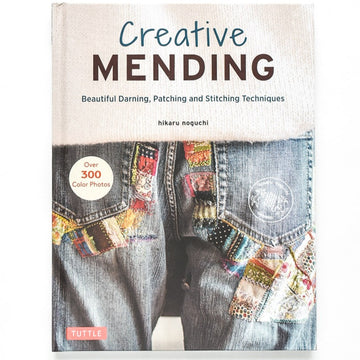
There are many ways to approach darning, from perfectly discreet repairs to expressive, decorative stitching. These are two of our favorites for learning techniques, finding inspiration, and building confidence.