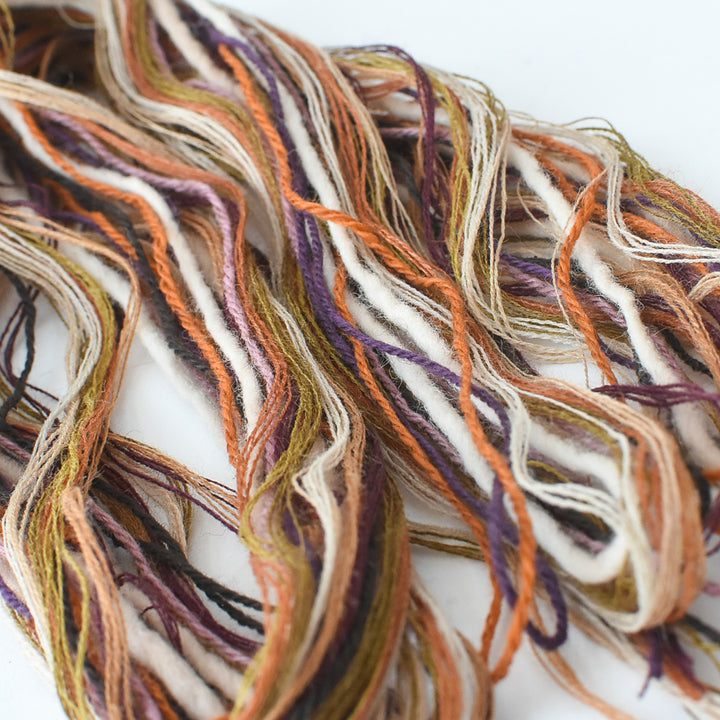
Where crisp detail meets modern color expression
What Is Nassen?
Nassen (捺染) refers to Japanese printed textile methods—most commonly screen printing and rotary printing—used to apply color on the surface of cloth.
Unlike dyeing methods that penetrate fibers (such as Chusen or Katazome), Nassen produces:
- Crisp, clean edges
- Highly detailed motifs
- Multi-color repeats
- Excellent reproducibility
“Nassen brought graphic clarity to Japanese textiles, allowing fine lines and modern palettes to flourish.”
It became especially popular in the 20th century as fashion, interior goods, and craft materials demanded greater color variety and consistency.

How the Nassen Process Works
While technologies vary, most Nassen methods follow a similar sequence.
1. The design is separated into color layers
Each color gets its own screen or rotary cylinder.
2. Screens or cylinders apply pigment or dye
Color sits largely on the surface of the cloth, which allows highly controlled placement.
3. Heat or steaming fixes the pigments
This stabilizes the print and ensures colorfastness.
4. The cloth is washed and finished
Softening, calendaring, or pressing may be used depending on the final product.
The result is a richly colored textile where every line is intentional and crisp.
Characteristics of Nassen Textiles
You can identify Nassen by:
- Sharp, unblurred edges
- Fine detail and micro-motifs
- Smooth surface color (no raised resist)
- Consistent repeat patterns
- Often vivid or contemporary palettes
Because pigment sits closer to the fabric surface, prints may feel slightly different from dyed textiles—but modern Nassen techniques are remarkably soft.
Common Uses for Nassen Fabrics
Nassen is frequently used for:
- Fashion fabrics
- Tenugui and gift goods
- Handkerchiefs and accessory textiles
- Home goods (cushions, runners)
- Craft fabrics with multiple color layers
Its versatility makes it a favorite among designers who want expressive color and repeatable motifs.
How Nassen Compares to Other Dyeing & Printing Methods
Comparison of Japanese Dyeing & Printing Techniques
| Technique | Method | Visual Traits | Common Uses |
|---|---|---|---|
| Yuzen (友禅染め) | Hand-painted dyes with resist outlines | Painterly detail, crisp resist lines | Formal kimono, art textiles |
| Chusen (注染) | Dye poured through stencils into folded cloth | Soft edges, reversible effects | Yukata, tenugui |
| Katazome (型染め) | Stencil-based rice-paste resist | Bold repeats, layered indigo | Kimono, noren |
| Nassen (捺染) | Screen/rotary surface printing | Sharp detail, multi-color repeats | Apparel, accessories, craft fabrics |
Care & Handling
To preserve printed surfaces:
- Wash gently, ideally inside a laundry net
- Avoid high heat or harsh detergents
- Keep out of prolonged sun exposure, which can fade surface pigments
- For handmade or multi-color prints, hand washing is best
Nassen textiles are durable, but gentle care preserves their clarity and brightness.