There are many ways to begin an embroidery project. You can open a kit with most of the decisions already made, start with a design printed directly onto cloth, or choose a motif from a book and build the project yourself.
There are really two related decisions to make:
-
Where will your design come from? A kit, pre-printed cloth, a pattern book, or your own imagination?
-
What will you stitch on? A piece of fabric that you will finish later, or a ready-sewn embroidery blank such as a pouch, tea towel, napkin, or tote?
None of these approaches is inherently better than another. The right choice depends on how much guidance you want, which supplies you already own, and which parts of the creative process you most enjoy.
If you are not sure where to begin, here is a closer look at the structure—and freedom—each option provides.
Choose an Embroidery Kit If You Want a Clear Path
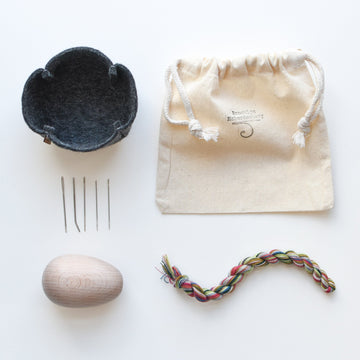
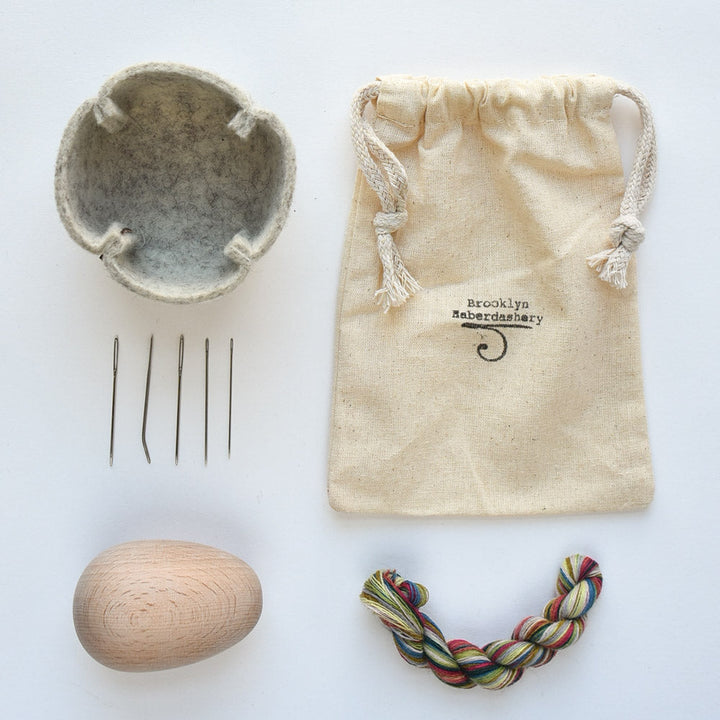
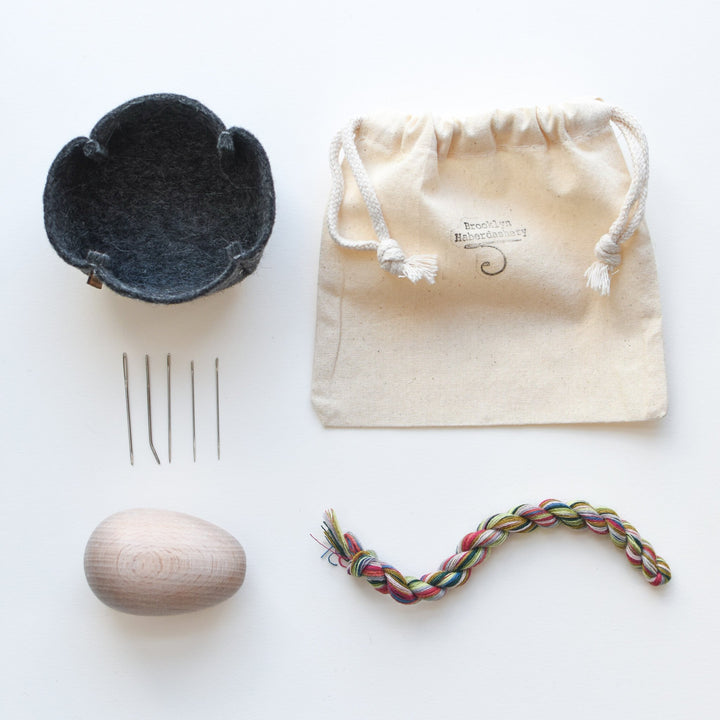
An embroidery kit gathers the principal parts of a project into one package. In many cases, the designer has already chosen the fabric, thread colors, stitches, and finished format, allowing you to concentrate on the stitching itself.
A kit may include:
-
Fabric with the design printed or transferred
-
Embroidery threads
-
A needle
-
Stitching instructions and diagrams
-
A hoop or frame
-
Materials needed to assemble or finish the project
Contents vary, so it is always worth reading the product description before beginning. Some kits include everything except scissors, while others require a hoop, sewing thread, stuffing, or another basic material. A project that becomes a pouch, ornament, brooch, or other three-dimensional object may also require some sewing or assembly after the embroidery is complete.
A kit may be right for you if:
-
You are new to embroidery and want the materials chosen for you.
-
You would like to make a specific finished object.
-
You want to try a designer’s style or learn a new technique.
-
You prefer not to transfer a pattern or select thread colors.
-
You want a portable project that is easy to pick up and work on.
Kits are often recommended for beginners, but they are not only for beginners. Experienced stitchers may appreciate the pleasure of opening a thoughtfully planned project and getting straight to the making.
The chief advantage is convenience. The tradeoff is that some creative decisions have already been made. You can still adapt the design, but changing the fabric or colors may mean replacing materials that were included in the kit.
Choose Pre-Printed Embroidery If You Want Guidance with More Freedom
With pre-printed embroidery, the design has already been placed on the fabric, removing the need to trace or transfer it yourself.
The design may be printed on a flat piece of cloth or on an already-sewn item such as a pouch or tote. In either case, the scale and placement have been established, but you may still choose the threads, colors, and stitches.
Some pre-printed projects include color and stitch suggestions. Others provide only the printed lines, leaving the interpretation entirely open.
Pre-printed embroidery may be right for you if:
-
You want to begin stitching without transferring a design.
-
You already have needles, a hoop, and a collection of threads.
-
You enjoy choosing your own colors and stitches.
-
You want some structure without following a complete kit.
-
You prefer to have the size and placement of the motif determined for you.
This format can be especially helpful when the placement of a design matters. A motif printed on a pouch, tote, handkerchief, or other finished item is already positioned with the final object in mind.
It is also a lovely way to build confidence. You can follow the designer’s example closely for one project, then become more adventurous with color and stitch choices on the next.
Before purchasing, check what is included and how the printed markings are intended to be handled. Some printed lines remain beneath the stitches, while others may fade or need to be removed after the embroidery is complete. Follow the instructions for the particular project rather than assuming that every printed design behaves the same way.
Choose a Pattern Book If You Enjoy Making the Creative Decisions
An embroidery book offers a collection of designs rather than a single project. You select the pattern, transfer it to a fabric of your choice, and decide how the finished embroidery will be used.
Some books provide precise thread colors and stitch diagrams. Others treat the patterns more like starting points, encouraging you to interpret the motifs in your own way.
A pattern book may be right for you if:
-
You want a range of designs to choose from.
-
You enjoy selecting fabrics and building color palettes.
-
You want to change the scale, placement, or arrangement of a motif.
-
You would like to use the patterns for many future projects.
-
You enjoy seeing how an embroidery artist develops a distinctive style.
A book offers wonderful long-term versatility. A single collection may contain patterns for flowers, animals, lettering, borders, seasonal motifs, or complete scenes. You might embroider one small element onto a pocket, combine several designs into a sampler, or revisit a favorite motif in different colors over the years.
The same pattern can take on a completely different character when stitched on natural linen, dark cotton, a checked fabric, or a useful household object. Changing the number of thread strands or substituting wool, silk, or linen thread adds another layer of possibility.
The tradeoff is that you will need to gather the materials and transfer the design yourself. For many stitchers, however, those decisions are part of the pleasure.
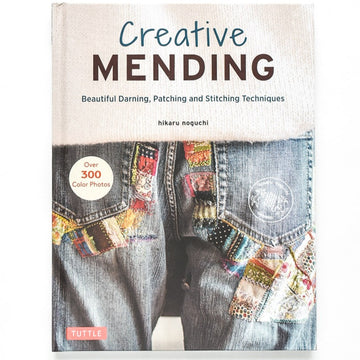
When choosing a book, look at more than the cover. Consider whether the included projects suit your skill level, whether the diagrams are clear to you, and whether the book’s written language matters for the way you learn. Many embroidery books can be followed through photographs, pattern sheets, and stitch diagrams even when the text is in another language, but a complete beginner may prefer more written instruction.
Choose an Embroidery Blank If You Want to Make Something Useful
An embroidery blank is an item that has already been sewn and is ready for you to embellish. Instead of stitching a piece of fabric and deciding what to make from it later, you begin with the finished form—a pouch, tea towel, napkin, tote bag, or another useful object.
Embroidery blanks do not have a design printed on them. You can add a pattern from a book, transfer your own drawing, stitch a name or monogram, or arrange a few simple motifs directly on the cloth.
An embroidery blank may be right for you if:
-
You want to make a useful or giftable object.
-
You enjoy embroidery but do not want to sew the finished item yourself.
-
You already have a pattern or motif in mind.
-
You want complete freedom over the design, placement, and colors.
-
You would like to personalize an everyday item.
A blank can be especially satisfying when you want the embroidery to become part of daily life. A small stitched sprig can make a linen napkin feel personal; a favorite motif can turn a plain pouch into something distinctly your own.
Before beginning, consider how the object will be used and washed. Choose stitches that can withstand regular handling, secure the thread ends carefully, and make sure you can comfortably reach the area you plan to embroider. Pockets, seams, linings, and narrow openings can affect where the hoop and needle will fit.
What About Drawing Your Own Design?
You do not need to begin with a published pattern at all. A blank piece of fabric—or an unprinted embroidery blank—can become your canvas.
You might draw directly onto the fabric with a removable marking tool, trace a simple illustration, adapt your own artwork, or compose a design from a few loose lines and shapes.
Starting with your own design gives you complete control over:
-
The subject
-
The size and placement
-
The fabric or finished object
-
The colors
-
The types of thread
-
The stitches and texture
This option provides the greatest creative freedom, but it can also involve the most decisions. If a completely blank surface feels intimidating, begin with something small: a leaf, a name, a simple flower, or a line drawing with very few details.
A Quick Comparison
| Format | Best for | What is decided for you | What you usually choose |
|---|---|---|---|
| Embroidery kit | Convenience, learning, and a defined project | Design, fabric, and usually threads | Minor color or stitch changes, if desired |
| Pre-printed embroidery | Easy setup with creative flexibility | Design, scale, and placement | Threads, colors, stitches, and sometimes finishing |
| Pattern book | Variety and repeated use | The motif and suggested approach | Fabric, placement, colors, materials, and finishing |
| Your own design | Maximum creative control | Nothing unless you choose a reference | Every part of the project |
Where Do Embroidery Blanks Fit?
An embroidery blank describes the object you stitch rather than the source of the design.
You can combine a blank pouch, tote, napkin, or tea towel with a motif from a pattern book or with a design of your own. If the finished item already has a design printed on it, it belongs instead to the pre-printed embroidery category.
Which Option Is Best for a Beginner?
A complete kit is often the simplest starting point because it removes many early decisions. When the materials and instructions have already been coordinated, you can focus on learning how to thread the needle, form the stitches, and handle the fabric.
But a kit is not the only beginner-friendly option.
Choose pre-printed embroidery if you already have basic supplies and are excited by color. The design will guide you while leaving room to experiment.
Choose a pattern book if selecting fabric and thread is part of what draws you to embroidery. You may need to learn how to transfer a design, but you will have many motifs to explore rather than a single project.
Choose an embroidery blank if you want to create a finished, useful object without sewing the object itself. Pair it with a simple pattern from a book or a small design of your own.
Choose your own design if personal expression matters more to you than following instructions. Keep the first motif simple and treat it as an experiment rather than a test.
Start with the Kind of Making You Enjoy
The best starting point is the one that lets you spend your attention on the parts of embroidery you find most satisfying.
If you want to open a package and begin, choose a kit. If you love selecting colors but would rather not transfer a pattern, try a pre-printed project. If you enjoy combining materials and making design decisions, begin with a pattern book. If you want to personalize something useful without sewing it first, choose an embroidery blank. And if what excites you most is creating something entirely your own, begin with a blank surface and your own design.
Whichever path you choose, the finished piece will still carry your hand. The rhythm of your stitches, your color choices, and the small variations that happen as you work will make it distinctly yours.
New to embroidery? Read our post for Getting Started with Hand Embroidery for help choosing fabric, threads, needles, hoops, and the other essentials you need to begin.